
1 Medical biology laboratory (MBL)
1.1 History
History of MBL standards, revisons of ISO 15189

A people that forgets its past condemns itself to relive it. — Winston Churchill
Medical biology laboratories (MBLmedical biology laboratorys) play a critical role in the diagnosis, monitoring and prevention of diseases.
Prior to the 2000s, MBLmedical biology laboratorys primarily used:
- ISO 9001 (general quality management)
- ISO/IEC 17025 (requirements for calibration and testing laboratories, though not well-suited to medical specifics)
A need for a specific standard arose to address the unique challenges faced by MBLmedical biology laboratorys:
- patient safety (risk of diagnostic errors)
- traceability of samples and results
- staff competence (biologists, technicians)
- local regulations (European directives, national laws)
The first edition of ISO 15189 was published in 2003 under the title: Medical biology laboratories — Particular requirements for quality and competence.
With the following objectivesmeasurable goal to be achieved:
- to harmonize MBL practices internationally
- to integrate Good Laboratory Practice (GLP) and quality requirements
- to facilitate the mutual recognition of results between countries
The structure is based on ISO/IEC 17025 (for the technical component) and ISO 9001 (for qualityaptitude to fulfill requirements (see also ISO 9000, 3.6.2) management).
Rapidly adopted by accreditationattestation issued by a third party constituting formal recognition of competence to perform specific activities bodies (COFRAC in France, UKAS in the United Kingdom), the standard became a global benchmark for MBLmedical biology laboratory accreditationattestation issued by a third party constituting formal recognition of competence to perform specific activities. The first revision (2007) included:
- stronger alignment with ISO 9001 (process approach)
- method validation
- risk management (introduction of patient safety concepts)
- traceability of samples and results
- the addition of Annexes to guide implementation (examples of quality documents)
The second revision (2012) included:
- the risk approach: risk management (inspired by ISO 31000)
- a focus on patient safety:
- requirements to identify and control risks associated with laboratory errors (incorrect sampling, contamination)
- process improvement:
- pre-examination: strengthened requirements for sample receipt and processing
- post-examination: result validation and communication with users
The current version (2022) - Medical laboratories – Requirements for quality and competence - includes several changes:
- management system requirements are located in Clause 8
- requirements related to point-of-care testing (POCT) are in Annex A (withdrawal of the ISO 22870 standard)
- increased emphasis on risk management (Sub-clauses 5.6 and 8.5)
- addition of conflict of interest management
- transparent communication with patients and easy access to results
Under Ordinance No. 2010-49 of January 13, 2010, on medical biology - ratified by Law No. 2013-442 of May 30, 2013, reforming medical biology - accreditationattestation issued by a third party constituting formal recognition of competence to perform specific activities is mandatory in France for:
- medical biology laboratories (MBLs)
- EFS (French Blood Establishment) facilities that perform biological qualification of donations, for activities involving medical biology testing
- facilities performing medical assistance biological activities related to reproduction
1.2 Scope
Scope of the ISO 15189 standard, sections

An expert is someone who has made every possible mistake in a very narrow field. Niels Bohr
The scopedescription of what must be done to obtain the expected results of this module applies to the qualityaptitude to fulfill requirements (see also ISO 9000, 3.6.2) (management systemset of processes allowing objectives to be achieved (see also ISO 9000, 3.5.3)) and competencepersonal skills, knowledge and experiences (see also ISO 19011, 3.10.4) of medical laboratoriesentity responsible for analyzing sample related to a disease or health condition, including POCTPoint-of-Care Testings.
The requirementsexplicit or implicit need or expectation (see also ISO 9000, 3.6.4) are presented in the following sections:
- 4 (General requirements)
- 5 (Structure and governance)
- 6 (Resources)
- 7 (Processes)
- 8 (Management system)
- Annex A (POCT)
1.3 Benefits
Benefits of ISO 15189 accreditation

Profit is not the goal of the company, but rather a signal that the company is well managed. Peter Drucker
The benefitspositive impact of the use of a medical device of ISO 15189 accreditationattestation issued by a third party constituting formal recognition of competence to perform specific activities for a laboratory are often:
- improved diagnostic accuracy:
- reduced errors
- validation of examination methods
- enhanced quality control
- complete traceability:
- sample tracking
- secure archiving
- proactive risk management:
- risk identification
- action plans
- process optimization:
- reduced turnaround times
- automation
- inventory management (reduced reagent waste)
- continual improvement:
- key performance indicators (KPIs)
- internal audits
- international recognition:
- accreditation = quality label
- patient and prescriber trust
- transparency and ethics
- competitive advantages:
- market differentiation
- strategic partnerships
- compliance with legal obligations:
- compliance with local regulations
- alignment with other standards (ISO 9001, ISO 17025, GDPR)
- audit preparation (ANSM in France, FDA in the United States)
- legal security:
- reduced risk of lawsuits
- professional liability insurance (preferential rates)
- cost reduction:
- less waste
- fewer claims
- increased revenue:
- attracting new users
- access to new markets
- funding and subsidies:
- access to public funding
- easier investment
- training and skills:
- skills development
- motivation and pride
- workplace safety:
- reduced accidents
Examples of benefitspositive impact of the use of a medical device of ISO 15189:2022 accreditationattestation issued by a third party constituting formal recognition of competence to perform specific activities:
- improved quality and reliability of results:
- ISO 15189 accreditation establishes strict procedures for each stage of the examination process: pre-examination, examination and post-examination
- sample traceability, equipment calibration and scientific validation of the methods used are guaranteed
- the laboratory reduces errors and improves the reliability of results
- increased trust among patients and healthcare professionals:
- ISO 15189 accreditation assures patients, physicians and health authorities that the analyses performed are accurate and comply with international standards
- accreditation demonstrates the laboratory's technical competence and its commitment to patient safety
- it strengthens cooperation between laboratories and healthcare facilities
- promoting safety and risk management in the laboratory:
- one of the major contributions of ISO 15189 is the implementation of a risk management system applied to laboratory activities
- it encourages the prevention of nonconformities, cross-contamination and safety incidents
- in addition to ISO 15190, it reinforces the culture of safety and health vigilance
- developing staff competence and continuing education:
- ISO 15189 accreditation recognizes the technical and scientific competence of laboratory staff
- it imposes requirements for qualifications, training and regular evaluation
- this approach promotes skills development and team motivation
- improving document management and traceability:
- the ISO 15189 standard emphasizes the rigorous management of documents, records and analysis reports
- every action, from sample receipt to results transmission, is documented and verifiable
- this transparency facilitates internal audits, inspections and interlaboratory comparisons
- ISO 15189 guarantees unambiguous traceability and continual quality improvement
1.4 Principles and steps
Principles of quality management systems, preparation and implementation of an MBL management system, PDCA cycle

Quality is anything that can be improved. — Masaaki Imai
The quality approachset of continual improvement activities to achieve the objectives of quality policy is a mindset that originates with top managementgroup or persons in charge of the organizational control at the highest level (see also ISO 9000, 3.1.1) as a priority strategic decision and extends to the entire staff. Top managementgroup or persons in charge of the organizational control at the highest level (see also ISO 9000, 3.1.1) defines the quality policystatement by top management allowing the establishment of quality objectives (see also ISO 9000, 3.5.9) , which sets out quality objectivesquality-related, measurable goal that must be achieved (see also ISO 9000, 3.7.2) applicable to all activitiesset of tasks to obtain a deliverable. The quality management systemset of processes allowing the achievement of the quality objectives (see also ISO 9000, 3.5.4) is the tool used to achieve these objectivesmeasurable goal to be achieved. The concept of preventionpresent view of a future risk is applied across the board.
Qualityaptitude to fulfill requirements (see also ISO 9000, 3.6.2) costs almost nothing when the patientperson from whom the sample is obtained (or userperson or entity utilizing the services of the medical laboratory) is satisfied: they remain loyal to us. It is only when the patientperson from whom the sample is obtained is not entirely satisfied that qualityaptitude to fulfill requirements (see also ISO 9000, 3.6.2) comes at a high price: sooner or later, the patientperson from whom the sample is obtained will turn to a competitor.
Price is forgotten; quality remains
The seven qualityaptitude to fulfill requirements (see also ISO 9000, 3.6.2) management principles (cf. figure 1-1) will help us achieve sustained performancemeasurable and expected results of the management system (see also ISO 9000, 3.7.8) (cf. ISO 9000:2026, § 4.2)
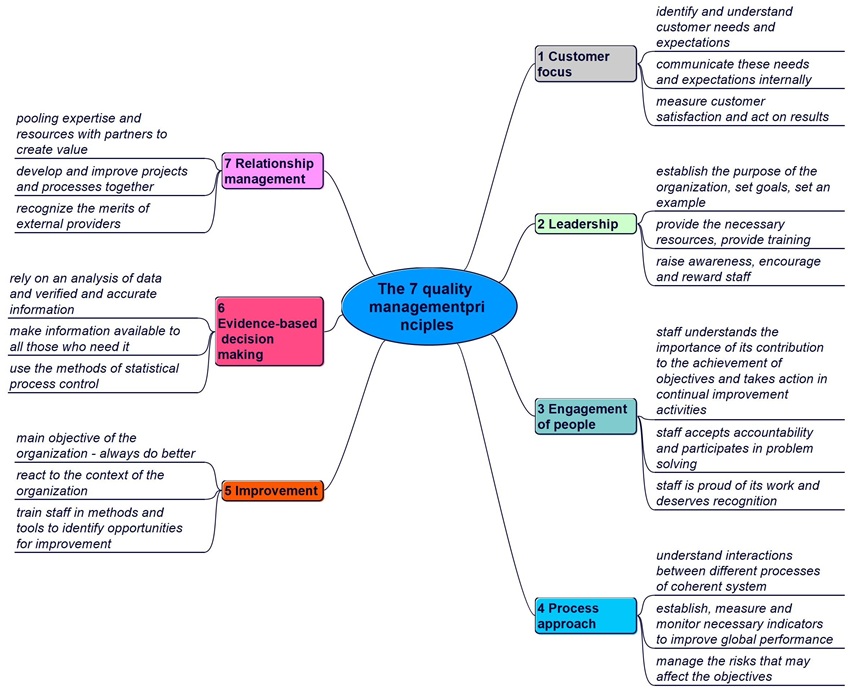
Figure 1-1. The 7 quality management principles
A well-prepared approach is half the battle won
The processactivities that transform inputs into outputs (see also ISO 9000, 3.4.1) of implementing management for a medical biology laboratory (MBLmedical biology laboratory) involves several stages. An example of preparation is shown in figure 1-2; cf. also annex 01. 
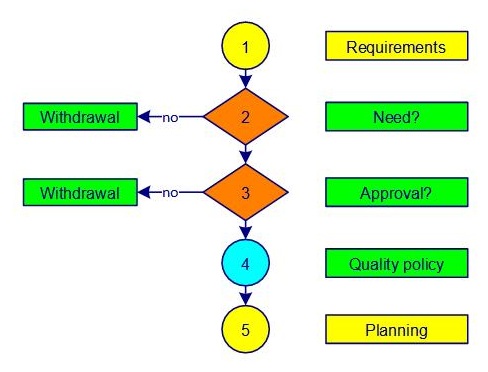
Figure 1-2. Preparation for managing an MBL
Step 1 involves identifying the needs and expectations (requirementsexplicit or implicit need or expectation (see also ISO 9000, 3.6.4)) of stakeholdersperson, group or organization that can affect or be affected by a company (see also ISO 26000, 2.20) (both internal and external). Top-level management involvement is absolutely essential. Consultant advice is often sought. Contact the accreditationattestation issued by a third party constituting formal recognition of competence to perform specific activities body (COFRAC in France).
One key question that arises very early on (Step 2) is the necessity of the decision itself. If it is not truly necessary, or if the estimated cost of the accreditationattestation issued by a third party constituting formal recognition of competence to perform specific activities processactivities that transform inputs into outputs (see also ISO 9000, 3.4.1) exceeds available resources, it is best to abandon the projecttemporary effort initiated with the goal of solving a problem immediately.
The benefitspositive impact of the use of a medical device of implementing a management systemset of processes allowing objectives to be achieved (see also ISO 9000, 3.5.3) often include:
- improved company image
- a competitive edge
- better financial results
- increased day-to-day efficiency
- staff who are informed, consulted, motivatedand proud
- promotion of best practices
- formalization of know-how
- process control
- up-to-date compliance with applicable regulations
- reduced production costs
- a mutually beneficial commitment
Cerba, a private laboratory with a national network of over 100 sites, decided early on to obtain ISO 15189 accreditation. Challenges prior to accreditation:
- each site used its own methods
- no centralized system for tracking samples
- average turnaround times of 48 to 72 hours for certain analyses
Actions implemented:
- harmonization of protocols across all sites (standardizing processes)
- centralized staff training (1,500 employees trained over two years)
- implementation of a unified Laboratory Information System (LIS) for sample traceability
- 100% of analyses verified prior to validation
- participation in External Quality Assessment (EQA) programs for 90% of tests
- risk management for critical processes (sample collection, transport)
Following ISO 15189 accreditation, the laboratory:
- reduced errors by 30%
- cut turnaround times by 40%
- increased the number of examination orders by 25%
- won public contracts (hospitals, clinics)
- reduced reagent waste (improved inventory management)
- improved patient satisfaction (4.6/5 rating in surveys)
The internalizing of the spirit of the principles and requirementsexplicit or implicit need or expectation (see also ISO 9000, 3.6.4) of an ISOInternational Organization for Standardization standard significantly improves the overall performancemeasurable and expected results of the management system (see also ISO 9000, 3.7.8) of your business - especially when it is not considered as a constraint, even if it is a legal obligation.
The third step involves determining whether the initiative has staff buy-in. An internal communication campaign regarding the management system's objectivesmeasurable goal to be achieved is launched. Staff members are made aware of the processactivities that transform inputs into outputs (see also ISO 9000, 3.4.1) and come to understand that the projecttemporary effort initiated with the goal of solving a problem cannot succeed without their participation.
Have confidence - success will come with the involvement and effort of all!
Define the vision (what we want to be), the mission (why we exist) and the companya structure that satisfies a need's strategic plan. The next step (4) involves incorporating regulatory requirementsexplicit or implicit need or expectation (see also ISO 9000, 3.6.4) specific to medical laboratoriesentity responsible for analyzing sample related to a disease or health condition into the quality policystatement by top management allowing the establishment of quality objectives (see also ISO 9000, 3.5.9) . If you do not yet have a copy of the ISO 15189 standard, now is the time to obtain one.
Planning is the final step (5) in preparing for ISO 15189 accreditationattestation issued by a third party constituting formal recognition of competence to perform specific activities. Top managementgroup or persons in charge of the organizational control at the highest level (see also ISO 9000, 3.1.1) confirms the necessary resources (financial and personnel). A top managementgroup or persons in charge of the organizational control at the highest level (see also ISO 9000, 3.1.1) representative (often the quality managerleader of the journey towards excellence) is appointed to lead the projecttemporary effort initiated with the goal of solving a problem. Top managementgroup or persons in charge of the organizational control at the highest level (see also ISO 9000, 3.1.1)'s commitment is formalized in a document communicated to all staff.
The establishment and implementation of the management systemset of processes allowing objectives to be achieved (see also ISO 9000, 3.5.3) (MSmanagement system) are illustrated in figure 1-3.
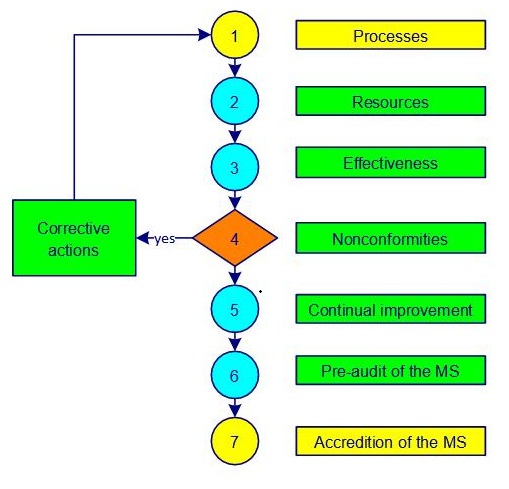
Figure 1-3. MS implementation
Step 1 involves identifying and defining processesactivities that transform inputs into outputs (see also ISO 9000, 3.4.1), as well as establishing specific requirementsexplicit or implicit need or expectation (see also ISO 9000, 3.6.4) within those processesactivities that transform inputs into outputs (see also ISO 9000, 3.4.1) and documents. New documents are created and the quality manualdocument specifying the general measures taken by an organization to obtain conforming products or services (see also ISO 9000, 3.8.8) is updated.
In Step 2, the new resources required to achieve quality objectivesquality-related, measurable goal that must be achieved (see also ISO 9000, 3.7.2) are determined. A plan covering tasks, responsibilitiescapacity to make a decision alone and deadlines is established and internal auditoreveryone who is trained to carry out audits (see also ISO 19011, 3.8) training is arranged.
Step 3 focuses on defining and implementing methods to measure the effectivenesscapacity to perform planned activities with minimum effort (see also ISO 9000, 3.7.11) and efficiencyfinancial relationship between achieved results and resources used (see also ISO 9000, 3.7.10) of each processactivities that transform inputs into outputs (see also ISO 9000, 3.4.1) (using indicatorsvalue of a parameter, associated with an objective, allowing the objective measure of its effectiveness (see also FD X50-171, 2.1) ). Internal auditssystematic and independent survey to determine whether activities and results comply with pre-established measures and are capable of achieving the objectives (see also ISO 19011, 3.1) are conducted to assess the extent to which specific requirementsexplicit or implicit need or expectation (see also ISO 9000, 3.6.4) have been implemented.
Step 4 involves cataloging all types of nonconformitiesnon-fulfillment of a specified requirement (see also ISO 9000, 3.6.9) and identifying various forms of wasteanything that adds cost but no value. Corrective actionsaction to eliminate the causes of nonconformity or any other undesirable event and to prevent their recurrence (see also ISO 9000, 3.12.2) are implemented and documented and an approach is established to prevent nonconformitiesnon-fulfillment of a specified requirement (see also ISO 9000, 3.6.9) and eliminate their root causes.
An initial assessment based on data analysis is conducted in Step 5. A table detailing the main Costs of Obtaining Quality (COQcosts of obtaining quality) is completed by the individuals with access to the relevant figures. Patientperson from whom the sample is obtained feedback and other data are analyzed to evaluate the relevance and effectivenesscapacity to perform planned activities with minimum effort (see also ISO 9000, 3.7.11) of the management systemset of processes allowing objectives to be achieved (see also ISO 9000, 3.5.3).
To conduct the mock auditsystematic and independent survey to determine whether activities and results comply with pre-established measures and are capable of achieving the objectives (see also ISO 19011, 3.1) (Step 6), documents such as the quality manualdocument specifying the general measures taken by an organization to obtain conforming products or services (see also ISO 9000, 3.8.8) and proceduresdocument describing the to carry out a process (see also ISO 9000, 3.4.5 and documented information) are verified and approved by the appropriate personnel. A management reviewperiodic survey carried out by top management of the management system for its continual improvement assesses compliance with applicable regulatory requirementsexplicit or implicit need or expectation (see also ISO 9000, 3.6.4) and the quality policystatement by top management allowing the establishment of quality objectives (see also ISO 9000, 3.5.9) and objectivesmeasurable goal to be achieved are finalized. A quality managerleader of the journey towards excellence from another laboratory or an external consultant can provide valuable insights, suggestions and recommendations.
Once the systemset of interacting processes (see also ISO 9000, 3.5.1) is properly implemented and adhered to, obtaining COFRACFrench Accreditation Committee accreditationattestation issued by a third party constituting formal recognition of competence to perform specific activities for the management systemset of processes allowing objectives to be achieved (see also ISO 9000, 3.5.3) becomes a formality (Step 7).
A relevant method for assessing your management systemset of processes allowing objectives to be achieved (see also ISO 9000, 3.5.3)'s performancemeasurable and expected results of the management system (see also ISO 9000, 3.7.8) level is the RADAR logic used in the EFQMEuropean Foundation for Quality Management (European Foundation for Quality Management) Excellence Model, which features nine criteria and an overall score out of 1,000 points.
The PDCAPlan, Do, Check, Act cycle, or Deming cycle (figure 1-4), applies to the control of any processactivities that transform inputs into outputs (see also ISO 9000, 3.4.1). PDCAPlan, Do, Check, Act cycles (Plan, Do, Check, Act) serve as a universal foundation for continual improvementprocess allowing the improvement of the global performance of the organization (see also ISO 9000, 3.3.2).
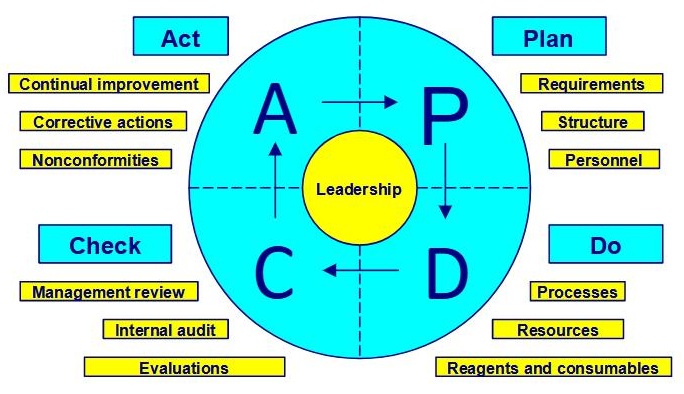
Figure 1-4. The Deming cycle
- Plan – Plan, define requirements, demonstrate leadership, manage patient rights, plan the management system and POCT activities, address risks, manage personnel (Clauses 4, 5, 6, 8 and Annex A)
- Do – Implement, manage processes, manage personnel, manage facilities, manage equipment, manage reagents and consumables, manage samples, control quality internally and within POCT activities (Clauses 6, 7, 8 and Annex A)
- Check – Compare, verify, compare performance, validate examination methods, audit, conduct management reviews, govern POCT activities (Clauses 7, 8 and Annex A)
- Act – Act, improve, control nonconformities, implement corrective actions, govern POCT activities (Clause 8 and Annex A)
 To deepen your knowledge of the Deming cycle and his 14 points of management theory, you can consult the book *Out of the Crisis* by W. Edwards Deming (Economica, 2002; originally published in 1982).