
3 Definitions T 35
Terms, definitions and books related to quality and audits

The beginning of wisdom is the definition of terms. Attributed to Socrates
Some terms and definitions currently used in this module:
Accident: undesired event causing death or health and environmental damages
Audit client: everyone requesting an audit
Audit conclusions: outcome of an audit
Audit criteria: everything against which audit evidence is compared
Audit findings: every deviation from audit criteria
Auditee: everyone who is audited
Auditor: everyone who is trained to conduct audits
Competence: personal skills, knowledge and experiences
Conformity: fulfillment of a specified requirement
Continual improvement: permanent process allowing the improvement of the global performance of the organization
Control: ensure compliance with the specified criteria
Customer: anyone who receives a product
Deviation: failure to meet a given threshold
Document (documented information): any support allowing the treatment of information
Hazard: situation that could lead to a potential incident
Incident: undesired event that could lead to health damages
Nonconformity: non-fulfillment of a specified requirement
Organization: a structure that satisfies a need
Problem: the distance that has to be overcome between real and desired situation
Procedure: set of actions to carry out a process
Product (or service): every result of a process or activity
Quality: aptitude to fulfil requirements
Record: document providing objective evidence of achieved results
Requirement: explicit or implicit need or expectation
Review: survey of a file, product, process so to verify whether preset objectives are achieved
Risk: likelihood of occurrence of a threat or an opportunity
Stakeholder: person, group or company that can affect or be affected by an organization
Supplier (external provider): an entity that provides a product
Work environment: set of human and physical factors in which work is carried out
Examples of stakeholders: investors, customers, external providers, employees and social, public or political organizations
In the terminology of quality management systems, do not confuse the following:
- anomaly, defect, dysfunction, failure, nonconformity, reject and waste
- an anomaly is a deviation from what is expected
- defect is the non-fulfillment of a requirement related to an intended use
- dysfunction is a degraded function which can lead to a failure
- failure is when a function has become unfit
- nonconformity is the non-fulfillment of a requirement in production
- reject is a nonconforming product which will be destroyed
- waste is when there are added costs but no value
- audit and inspect
- to audit is to improve the management system
- to inspect is to verify the conformity of a process or product
- audit, auditee and auditor
- an audit is a process of evaluating and improving the quality management system
- an auditee is the one who is audited
- an auditor is the one who conducts the audit
- audit program and plan
- an audit program is the annual planning of the audits
- an audit plan is the description of the audit activities
- communicate and inform
- to communicate is to pass on a message, listen to the reaction and discuss
- to inform is to give someone meaningful data
- control and optimization
- control is meeting the objectives
- optimization is the search for the best possible results
- customer, external provider and subcontractor
- a customer receives a product
- an external provider provides a product
- a subcontractor provides a service or a product on which a specific work is done
- effectiveness and efficiency
- effectiveness is the level of achievement of planned results
- efficiency is the ratio between results and resources
- follow-up and review
- follow-up is the verification of the obtained results of an action
- review is the analysis of the effectiveness in achieving objectives
- indicator and objective
- an indicator is the information on the difference between the achieved result and the preset objective
- an objective is a sought after commitment
- organization and enterprise, society, company
- organization is the term used in the standard ISO 9001 as the entity between the supplier and the customer
- enterprise, society and company are examples of organizations
- organizational chart and process map
- the organizational chart is the graphic display of departments and their links
- the process map is the graphic display of processes and their interaction
- procedure, process, product, activity and task
- a procedure is the description of how we should conform to the rules
- a process is how we satisfy the customer using people to achieve the objectives
- a product is the result of a process
- an activity is a set of tasks
- a task is a sequence of simple operations
Remark 1: each time you use the term "improvement opportunity" instead of nonconformity, malfunction or failure, the auditee will gain a little more confidence in you.
Remark 2: the use of ISO 19011 and ISO 9000 definitions is recommended. The most important thing is to determine a common and unequivocal vocabulary for everyone in the company.
Remark 3: the customer can also be the user, the beneficiary, the initiator, the client, the prime contractor, the consumer.
Remark 4: ISO 19011 version 2018 uses the terms procedure (.gif) ), record (
), record ( ) and documented information together. We prefer the terms document, procedure and record.
For other definitions, comments, explanations and interpretations that you don’t find in this module and in annex 06, you can consult: .jpg)
- ISO Online Browsing platform (OBP)
- IEC Electropedia
- Information technology -Vocabulary - Part 36: Learning, education and training (ISO/IEC 2382-36, 2019)
Books for further reading on internal audits:
 Denis Provonost, Internal Quality Auditing, ASQ Quality Press, 2000
 J. P. Russel, The Internal Auditing Pocket Guide, ASQ Quality Press, 2002
 Dennis Arter and al, How to Audit the Process Based QMS, Quality Press, 2003
.jpg) Spencer Pickett, The Essential Handbook of Internal Auditing, John Wiley & Sons, 2005
Spencer Pickett, The Essential Handbook of Internal Auditing, John Wiley & Sons, 2005 Karen Welch, The Process Approach Audit Checklist for Manufacturing, ASQ Quality Press, 2005
 Paul Palmes, Process Driven Comprehensive Auditing, ASQ Quality Press, 2009
 David Hoyle, John Thompson, ISO 9000 Auditor questions, Transition Support, 2009
 J. P. Russel, The Process Auditing and Techniques Guide, ASQ Quality Press, 2010
 Janet Smith, Auditing Beyond Compliance, ASQ Quality Press, 2012
 Patrick Ambrose, ISO 9001:2008: Process Auditing Checklist, Amazon Digital Services, 2013
 Denise Robitaille, The (Almost) Painless ISO 9001:2015 Transition, Paton Professional, 2015
 Jan Gillet, Implementing Iso 9001:2015: Thrill your customers and transform your cost base with the new gold standard for business management, Infinite Ideas, 2015
 Charles Cianfrani, John West, ISO 9001:2015 Explained, ASQ Quality Press, 2015
 Denise Robitaille, ISO 9001:2015 Handbook for Small and Medium-Sized Businesses, Quality Press, 2016
 Craig Cochran, ISO 9001:2015 in Plain English, Paton Professional, 2015
 Ann Philips, ISO 9001:2015 Internal Audits Made Easy, ASQ, 2015
 Jeremy Hazel, José Dominguez, Jim Collins, Memory Jogger ISO 9001:2015: What Is It? How Do I Do It? Tools and Techniques to Achieve It, Goal/QPC, 2016
 Alka Jarvis, Paul Palmes, ISO 9001: 2015: Understand, Implement, Succeed!, Prentice hall, 2016
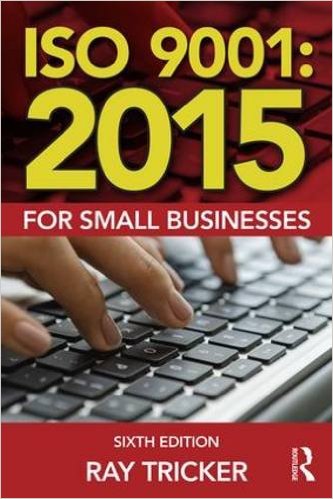 Ray Tricker, ISO 9001:2015 for Small Businesses, Routledge, 2016
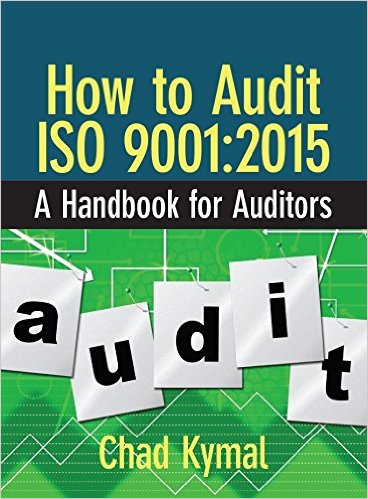 Chad Kymal, How to Audit ISO 9001:2015: A Handbook for Auditors, ASQ, 2016
 Minute of relaxation. Paganini's violin concert performed with facial expressions.
When I think of all the books still left for me to read, I am certain of further happiness. Jules Renard