
4 Context of the organization .gif)
- 4.1 The organization and its context
- 4.2 Needs and expectations of stakeholders
- 4.3 Scope of the EMS
- 4.4 EMS
4.1 The organization and its context
Understand the organization and its context. External and internal issues that can influence the EMS
Requirements 1 to 2 (see also the quiz)
The two most important things in a company do not appear in its balance sheet: its reputation and its people. Henry Ford
To successfully implement an environmental management system, we must understand and evaluate everything that can influence the reason for being and business performance. You should think carefully about a few key activities:
- develop a thorough diagnosis of the unique context in which your company exists, taking into account these issues:
- the external environment, such as:
- social
- regulatory (REACH, european directive on waste)
- economic
- technology
- the internal environment, such as:
- specific aspects of the corporate culture:
- vision
- rationale, purpose and mission
- core values
- staff
- products and services
- internal processes (manage waste, reduce energy consumption)
- infrastructure
- specific aspects of the corporate culture:
- the external environment, such as:
- regularly monitor and review all information related to external and internal issues
- analyze the factors that may influence the achievement of business objectives:
- risks and opportunities (§ 6.1.1)
- environmental aspects (§ 6.1.2)
- compliance obligations (§ 6.1.3)
- establish significant environmental impacts that could affect or be affected by the company
The SWOT and PESTEL analyses can be useful for relevant analysis of business context (cf. annex 05). 
A list of external and internal issues is created by a multidisciplinary team, (cf. annex 07). Each issue is identified by its level of influence and control. Priority is given to issues with great influence and poor control.
.jpg) Minute of relaxation. Game: Context of the company
Minute of relaxation. Game: Context of the company
- diagnosis of the context includes the main external and internal issues
- the core values as part of the corporate culture are taken into account in the context of the company
- the list of environmental aspects and impacts is regularly updated
- the results of the context analysis are widely diffused
- the SWOT analysis includes many relevant examples
- the SWOT analysis is a powerful tool for identifying the main threats and opportunities
- some issues of the context of the company are not taken into account
- some environmental impacts are not taken into account
- the environmental impacts are not prioritized
- risk analysis does not take into account strategic issues
- no clear link between the SWOT analysis and the actions undertaken
4.2 Needs and expectations of stakeholders
Understand the requirements of stakeholders. Identify stakeholders, their needs and expectations
Requirements 3 to 5

There is only one valid definition of a business purpose: to create a customer. Peter Drucker
To understand the needs and expectations of stakeholders, we must begin by determining those who may be affected by the environmental management system, such as:
- employees
- customers
- external providers
- owners
- shareholders
- bankers
- distributors
- competitors
- citizens
- neighbors
- social and political organizations
- environmental NGOs
A list of stakeholders is carried out by a multidisciplinary team. Every stakeholder is identified by its level of influence and control in connection with the business context. Priority is given to stakeholders with great influence and poor control.
The customer is king but we still can fight against rudeness. This example is from the restaurant La petite Syrah in Nice and its coffee prices:

“A coffee”...................................7 €
“A coffee, please”...............4,25 €
“Hello, a coffee, please”....1,40 €
Anticipating the reasonable and relevant needs and expectations of stakeholders involves:
- meeting the requirements of protection of the environment
- preparing to address risks
- finding improvement opportunities
When a requirementexplicit or implicit need or expectation (see also ISO 9000, 3.1.2) is accepted, it becomes an internal requirementexplicit or implicit need or expectation (see also ISO 9000, 3.1.2) of the EMSenvironmental management system (good environmental practices, environmental commitments in contracts).
- the list of stakeholders is updated
- the needs and expectations of stakeholders are established through meetings on-site, surveys, roundtables and meetings (monthly or frequent)
- the fulfilment of compliance obligations is a prevention approach and not a constraint
- compliance obligations are not taken into account
- city sanitation regulation defining the discharge conditions to the network is not determined as a compliance obligation
- the expectations of stakeholders are not determined
- the list of stakeholders does not contain their area of activity
4.3 Scope of the EMS
Define the scope of the EMS
Requirements 6 to 14

In many areas, the winner is the one who is best informed. André Muller
The scope (or, in other words, the perimeter) of the environmental management system is defined. If exclusions exist, a justification is provided. Productsany outcome of a process or activity (see also ISO 9000, 3.4.2), services and activities that may have significant environmental aspects are included in a document which is kept up to date and is available to all stakeholders, see document set D 07v26.
To properly determine the scope of the EMSenvironmental management system, the specific characteristics of the company's context are taken into account, such as:
- issues (cf. sub-clause 4.1)
- dangerousness of products and services in a life cycle perspective
- corporate culture
- environment:
- social
- financial
- technology
- economic
- requirements of stakeholders (cf. sub-clause 4.2)
- compliance obligations
- oursourced processes
- the scope is relevent and available upon request
- the scope takes into account the entire life cycle of products
- some products are outside the scope of the EMS without justification
- the paint shop is not included in the scope of the EMS
- the scope is obsolete (a new subsidiary is not included)
- an environmental aspect is not taken into account
4.4 EMS
Requirements of the IEMS, processes and interactions
Requirements 15 to 16

It is in the fundamental process of confronting problems and solving them that life finds its meaning. Scott Peck
The requirementsexplicit or implicit need or expectation (see also ISO 9000, 3.1.2) of the ISO 14001 standard include:
- the environmental performance and
- the control of business processes
To do this the context and issues are taken into account and:
- the environmental management system is:
- established
- documented (a simple and sufficient documentation system is set up)
- implemented and
- continually improved
- the environmental policy, objectives, resources and the work environment are determined
- environmental requirements are integrated into business processes
- risks are determined and actions to reduce them are established (cf. sub-clause 6.1)
- the core necessary EMS processes are controlled:
- corresponding resources are ensured
- the inputs and outputs are determined
- the necessary information is available
- owners are appointed (responsibilities and authorities defined)
- sequences and interactions are determined
- each process is measured and monitored (established criteria), targets are set and performance indicators analyzed
- process performance is evaluated
- necessary changes are implemented to achieve the expected results
- actions for continual improvement of processes are established
- an environmental diagnostic is carried out, environmental aspects are determined and significant environmental impacts are determined
- audits and reviews of the EMS are performed regularly
- an action plan helps with the implementation of the environmental policy, the achievement of the company's objectives and the improvement of its performance
- history of emergencies, incidents and nonconformities are evaluated, potential emergencies are determined, evaluated and methods are implemented to respond
The environmental manual is not a requirementexplicit or implicit need or expectation (see also ISO 9000, 3.1.2) of ISO 14001 version 2026, but it is always a possible method to present the company, its EMSenvironmental management system and its procedures and processes (cf. annex 08).
The ISO guide “The integrated use of management system standards” of 2018, contains relevant recommendations on the integration of management systems.
The requirementsexplicit or implicit need or expectation (see also ISO 9000, 3.1.2) of the ISO 14001 standard are shown in figures 4-1:
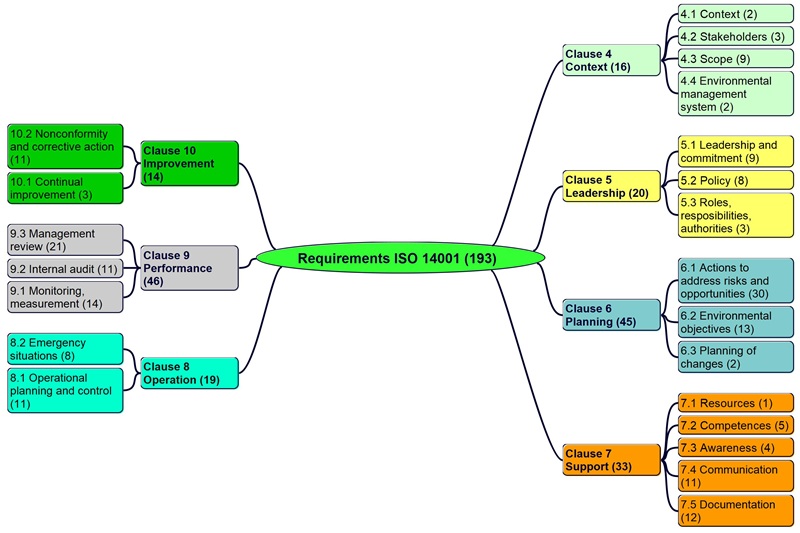
Figure 4-1. The requirements of the ISO 14001: 2026 standard
- the process map has enough arrows to show who the customer (internal or external) is
- for a process, it is better to use a lot of arrows (several customers) rather than to forget one
- reveal the added value of the process during the process review
- the analysis of process performance is an example of continual improvement and evidence of the effectiveness of the EMS
- top management regularly monitors the objectives and action plans of the EMS
- the commitments of top management on prevention and continual improvement are widely diffused
- some process outputs are not set correctly (customers not considered)
- process effectiveness criteria are not established
- the process owners are not formalized
- outsourced processes are not dermined
- many real activities are not determined in any process
- control of outsourced services is not described
- sequences and interactions of certain processes are not determined
- criteria and methods for ensuring effective processes are not determined
- monitoring the effectiveness of certain processes is not established
- the EMS resources do not allow achievement of environmental objectives
- the EMS is not updated (new processes not determined)
- the threats and weaknesses identified in the SWOT analysis remain without actions